Indigenous Words in Brazilian Portuguese: 20 Words You May Already Know
Brazilian Portuguese contains hundreds of words inherited from Indigenous languages. Many of them are so common today that most speakers rarely stop to think about where they came from. Discover some fascinating examples related to food, animals, places, and everyday life.
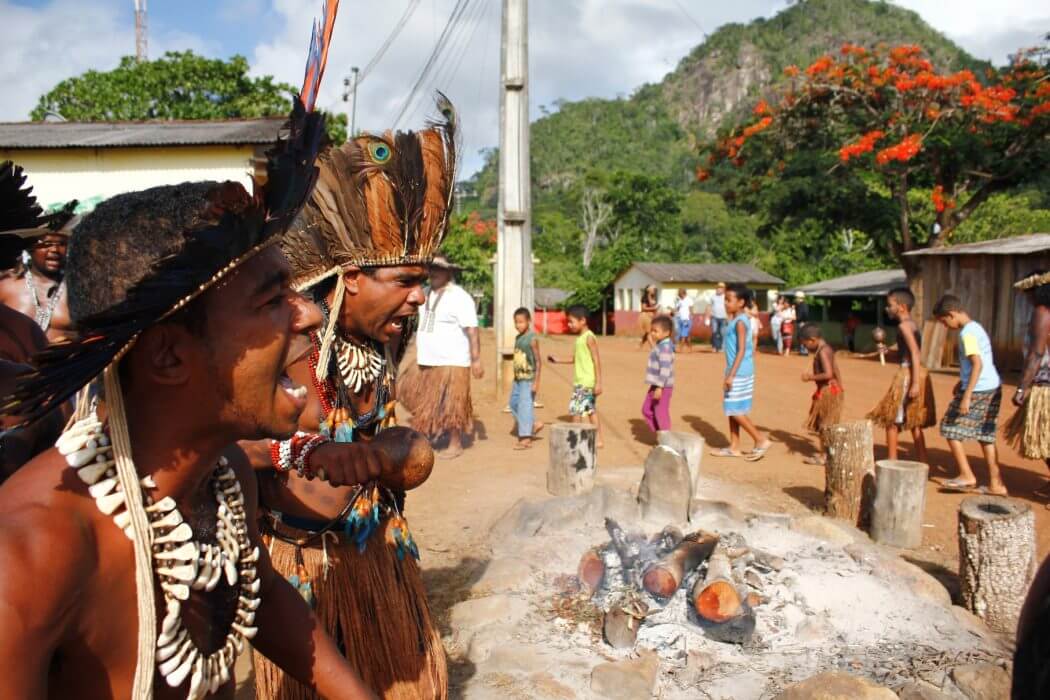
Indigenous Words in Brazilian Portuguese
Brazilian Portuguese is much more than Portuguese brought from Europe.
Over the centuries, the language spoken in Brazil developed through contact between different peoples and cultures. Indigenous languages, African languages, European Portuguese, and later immigrant languages all contributed to the vocabulary and character of modern Brazilian Portuguese.
Indigenous languages had an especially strong influence on words connected to Brazilian nature, animals, plants, food, geography, and everyday life.
Many of these words came from Old Tupi and other languages of the Tupi-Guarani family, although not every Indigenous word in Portuguese comes from Tupi.
You probably already know some of them without realizing their Indigenous origin.
1. Abacaxi
Abacaxi means pineapple.
It is one of the most common fruits in Brazil and a word you will hear everywhere:
Eu comprei um abacaxi.
I bought a pineapple.
Interestingly, abacaxi can also appear in the informal expression:
Descascar um abacaxi.
Literally, this means “to peel a pineapple,” but figuratively it means to deal with a difficult problem.
2. Mandioca
Mandioca is cassava or manioc, one of the most important traditional foods in Brazil.
Depending on the region and preparation, you may also hear words such as aipim or macaxeira.
Cassava is used to make many Brazilian foods, including flour, tapioca, and different cakes.
3. Tapioca
Tapioca is another word with Indigenous roots.
In Brazil, it usually refers to the popular dish made with hydrated cassava starch cooked in a frying pan.
You might hear:
Quero uma tapioca com queijo.
“I want a tapioca with cheese.”
4. Pipoca
One of the happiest words in Portuguese: pipoca! 🍿
It means popcorn.
At the cinema you can say:
Vamos comprar pipoca?
“Shall we buy popcorn?”
The word is traditionally connected to a Tupi expression describing something that bursts or pops.
5. Caju
Caju means cashew.
The cashew fruit is very common in northeastern Brazil. The famous cashew nut grows attached to the fruit.
In Portuguese:
suco de caju
cashew juice
6. Maracujá
Maracujá means passion fruit.
It is extremely common in Brazil and is used in juices, desserts, mousses, sauces, and sweets.
A very useful phrase:
Suco de maracujá, por favor.
“Passion fruit juice, please.”
7. Capim
Capim means grass, especially the kind of grass used as vegetation or animal feed.
For example:
O cavalo está comendo capim.
“The horse is eating grass.”
8. Mingau
Mingau is a type of porridge.
It can be made with oats, corn, rice, cassava starch, or other ingredients.
Brazilian children often grow up eating different kinds of mingau.
9. Arara
Arara is a macaw, one of the colorful tropical birds strongly associated with Brazil.
Example:
A arara tem penas muito coloridas.
“The macaw has very colorful feathers.”
10. Capivara
The capivara, or capybara, is the world's largest living rodent and one of Brazil's most recognizable animals.
You may see capybaras near rivers, lakes, and even in parks inside Brazilian cities.
Olha aquela capivara!
“Look at that capybara!”
11. Jacaré
Jacaré means caiman or, more loosely in everyday translations, alligator.
The word is very common in Brazil.
Há jacarés nesse rio.
“There are caimans in this river.”
12. Piranha
This one became famous internationally.
Piranha refers to the freshwater fish found in South American rivers.
The Portuguese word entered several other languages almost unchanged.
13. Tatu
Tatu means armadillo.
Brazil has several species of armadillos, and the word appears in names, songs, expressions, and regional culture.
14. Tamanduá
Tamanduá means anteater.
Brazil is home to different species, including the impressive:
tamanduá-bandeira — giant anteater.
15. Tucano
Tucano means toucan.
Another iconic Brazilian bird, easily recognized by its enormous colorful beak.
The word also entered English as toucan.
16. Peteca
Peteca is a traditional Brazilian object and game with Indigenous origins.
It looks somewhat like a shuttlecock and is hit with the hand.
Today, peteca can be played casually or competitively.
17. Tocaia
Tocaia means an ambush or a hidden place from which someone waits for another person.
The expression:
ficar de tocaia
means something like to lie in wait.
18. Paraná
Many Brazilian place names also preserve Indigenous vocabulary.
Paraná is the name of both a Brazilian state and an important river.
Indigenous languages left an enormous mark on Brazilian geography.
19. Paraíba
Paraíba is another example.
It is the name of a northeastern Brazilian state and also appears in the names of rivers and locations.
20. Ipanema
Today, Ipanema is internationally famous because of Rio de Janeiro and the song The Girl from Ipanema.
But the name itself predates modern Rio and comes from an Indigenous language.
It is one of countless Indigenous place names still used every day in Brazil.
Indigenous Influence Is Everywhere
Once you start noticing these words, you begin to see Indigenous influence throughout Brazilian Portuguese.
It appears particularly often in names for:
animals;
fruits and plants;
food;
rivers;
cities and neighborhoods;
geographical features;
objects associated with traditional Brazilian life.
Words such as abacaxi, pipoca, mandioca, maracujá, capivara, jacaré, tatu, arara, tucano, and peteca feel completely natural to modern Portuguese speakers.
Yet they also preserve traces of languages spoken in Brazil long before Portuguese arrived.
A Language Carries History
Learning Portuguese is not only about memorizing grammar and vocabulary.
Every word can carry a piece of history.
Brazilian Portuguese became what it is today because different cultures, languages, and peoples interacted for centuries.
Understanding where words come from can therefore make learning Portuguese much more interesting — and can help you understand Brazil itself.
So the next time you order a suco de maracujá, eat pipoca, see a capivara, or prepare mandioca, remember:
you are speaking a little piece of Brazil's Indigenous linguistic heritage. 🇧🇷
Which of these Portuguese words did you already know?
Try choosing five and creating your own sentences with them. Learning vocabulary in context makes it much easier to remember.